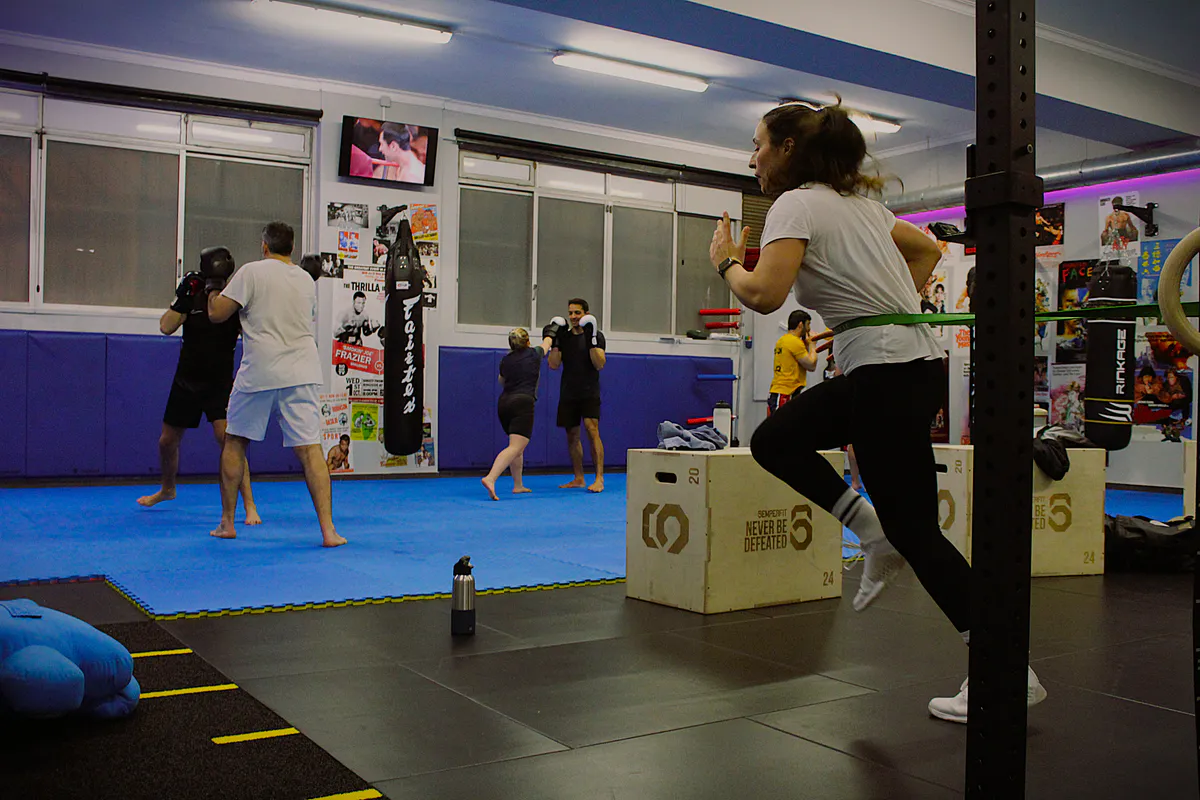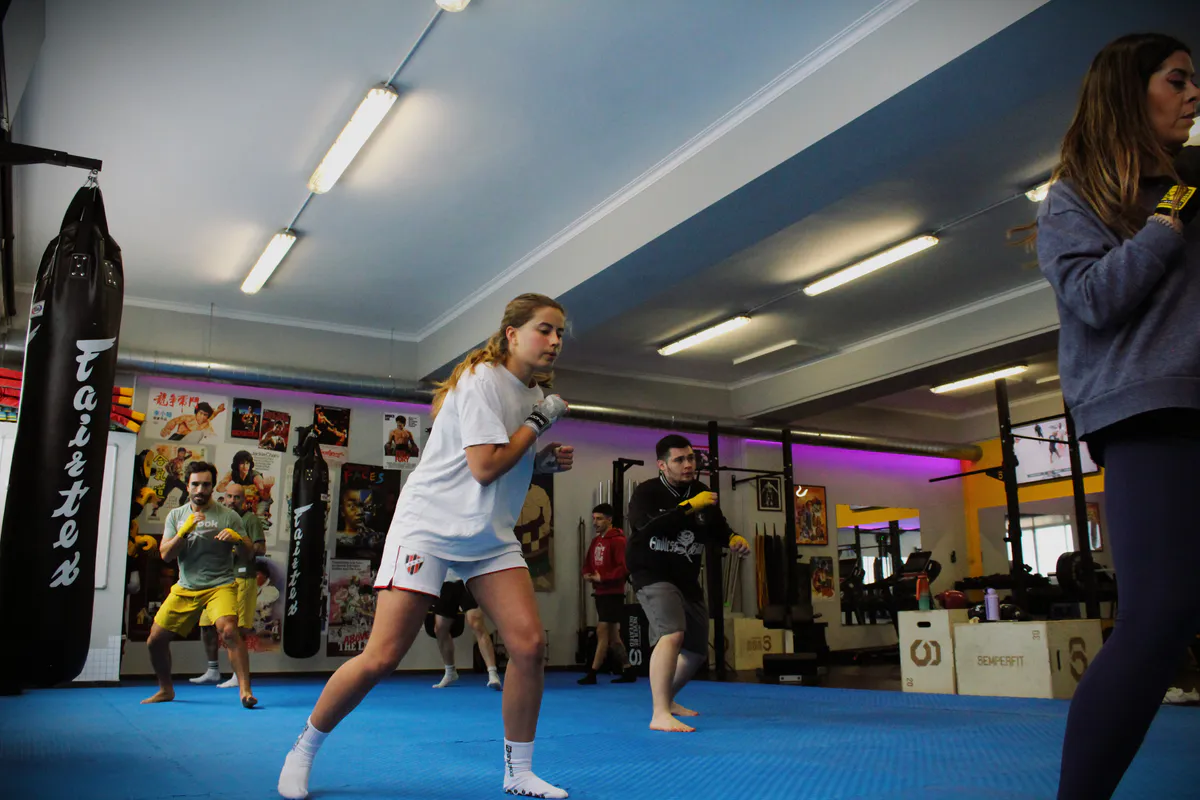
You arrive at training after an impossible day. Head full of noise. Unanswered emails, tightening deadlines, a difficult conversation you can’t shake. You step onto the mat, the coach calls the warm-up, and for the next 60 minutes nothing else exists. When you leave, the stress hasn’t magically vanished, but your head is clear, your body is tired in the right way, and you feel like yourself again.
This isn’t marketing. It’s what we hear, week after week, from the people who train with us. And there’s real science behind the impact that martial arts training has on mental health.
The problem nobody talks about
Portugal is one of the largest consumers of anxiolytics and antidepressants in Europe. That’s not an opinion. It’s data. We live increasingly sedentary, hyperconnected and stressful lives. The mind is always on. The body is always still. And the fitness industry responds by selling aesthetics: calories, abs, before-and-after photos. What it rarely sells is mental health.
The problem isn’t lack of exercise. The problem is lack of purposeful training. Something that challenges body and mind simultaneously, that demands total focus, that creates real human connections. This is exactly what martial arts offer. Not as an alternative to clinical treatment, but as a powerful complement that acts on the body, the mind and the social life of those who train.
How martial arts act on the brain
When you train Jiu-Jitsu, Muay Thai or boxing, several things happen at once:
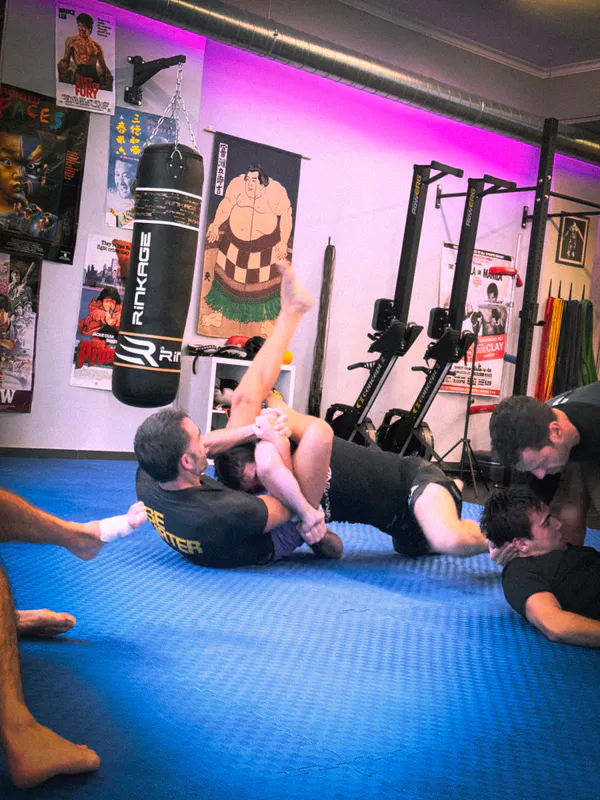
Flow state. When someone is trying to pass your guard or you’re throwing combinations at the pads, you can’t think about anything else. Your brain needs 100% of its capacity to process distance, timing, technique and reaction. This total focus on the present, the so-called “flow state”, is one of the most effective forms of mental reset. It’s meditation in motion, without needing to sit in silence.
Cortisol regulation. Intense physical effort followed by recovery recalibrates the stress response system. With regular training, your body becomes more efficient at managing pressure, inside and outside the dojo.
Neuroplasticity. Learning complex motor patterns (a Jiu-Jitsu sweep, a boxing combination, a Muay Thai kick defence) stimulates brain growth in ways that repetitive exercises simply cannot.
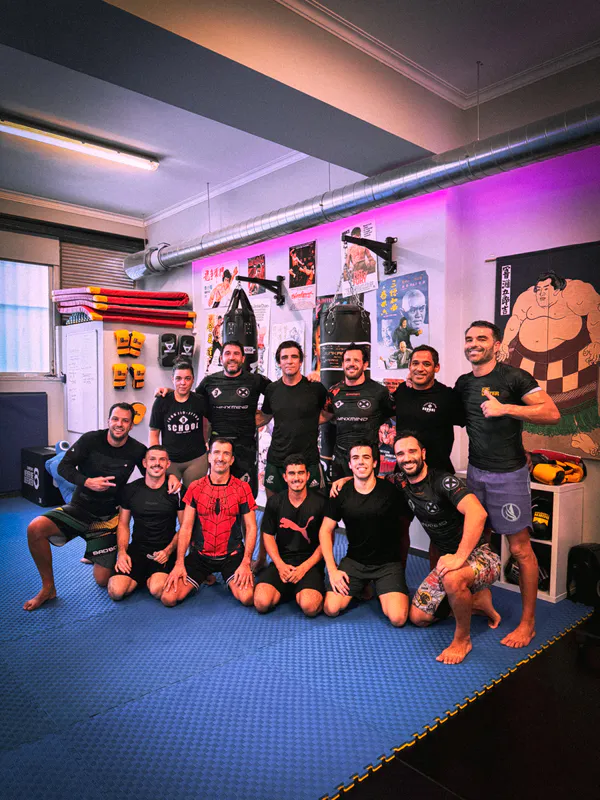
Social bonding. Training with a partner requires mutual trust. When you roll with someone in Jiu-Jitsu or work pads in boxing, you’re building a connection that goes far beyond the gym. This interaction releases oxytocin and creates a sense of belonging that directly combats isolation.
Routine as anchor. In a chaotic world, having a fixed training schedule (Tuesday and Thursday at 7pm, for example) creates a point of stability. Something predictable and positive in the week.
The mat as therapy
These aren’t isolated cases. It’s a pattern we see repeatedly at Be Water:
The person who came to lose weight and stayed because training saved their headspace. The executive who arrived exhausted and discovered that 5 rounds of pads do more for stress than any meditation app. The mother who didn’t have an hour to herself and found in the 11am class the moment where she becomes herself again.
We don’t promise cures. But we promise this: if you train consistently, you’ll notice differences in how you sleep, how you handle pressure, and how you feel about yourself. Training doesn’t replace a psychologist, but it might be the most underrated complement that exists.
Why martial arts and not just the gym?
It’s a fair question. Exercise is exercise, right? Not exactly.
A conventional gym is, by nature, solitary. You put in your earphones, do your sets, leave. Nobody notices if you don’t show up. Nobody depends on you. The exercises are repetitive and progress is measured in kilos on the bar, which is valid, but limited.
Martial arts are the opposite. They’re social: your training partner is expecting you. They’re cognitively demanding: you learn to solve increasingly complex problems under pressure. They create identity: “I train Jiu-Jitsu” is different from “I go to the gym.” And they’re progressive in a way that feeds intrinsic motivation. Each new technique, each belt, each round where you kept your composure is a tangible victory.
At Be Water, we combine both worlds. Plans include access to functional training (strength and conditioning with linear progression) and martial arts (Jiu-Jitsu, Muay Thai, boxing). It’s the ideal combination: the body gets strong, the mind gets sharp, and the community gives you the reason to keep going.
Each modality, a different path
Each martial art acts on the mind in a distinct way:
- Jiu-Jitsu is meditation in motion. Problem-solving on the ground that demands absolute focus. Teaches patience, acceptance (you’ll lose many times before winning) and the ability to start again. Learn more about Jiu-Jitsu for beginners →
- Muay Thai is the discharge. Explosive, rhythmic, cathartic. Many practitioners describe it as “therapy with gloves.” Discover the benefits of Muay Thai →
- Boxing is precision. The rhythm of combinations is almost meditative. Develops self-control under pressure and confidence built on real competence. Read the boxing beginners guide →
- Functional training is the foundation. Builds the physical confidence that makes everything else possible. The immediate effect of an intense conditioning session is a powerful dose of endorphins.
You don’t need to choose one. With Be Water plans, you try them all and discover which fits what you need right now.
How to start (if you’ve never trained anything)
We know the hardest step is the first one. Starting martial arts feels more intimidating than signing up at a gym. Fear of contact, fear of not knowing the rules, fear of looking foolish. Every single one of our members went through that. Every one.
Three steps:
- Choose a modality that appeals to you, or start with functional training to build a base
- Send a message on WhatsApp (933 869 791) and book your free trial class
- Arrive 15 minutes early, in comfortable clothes. The rest is on us.
The hardest part is walking through the door. After that, the mat takes care of everything.
Be Water Lisboa — Av. do Brasil 7, Campo Grande. Monday to Friday 7am–9pm, Saturday 10am–1pm.
— Be Water Team